
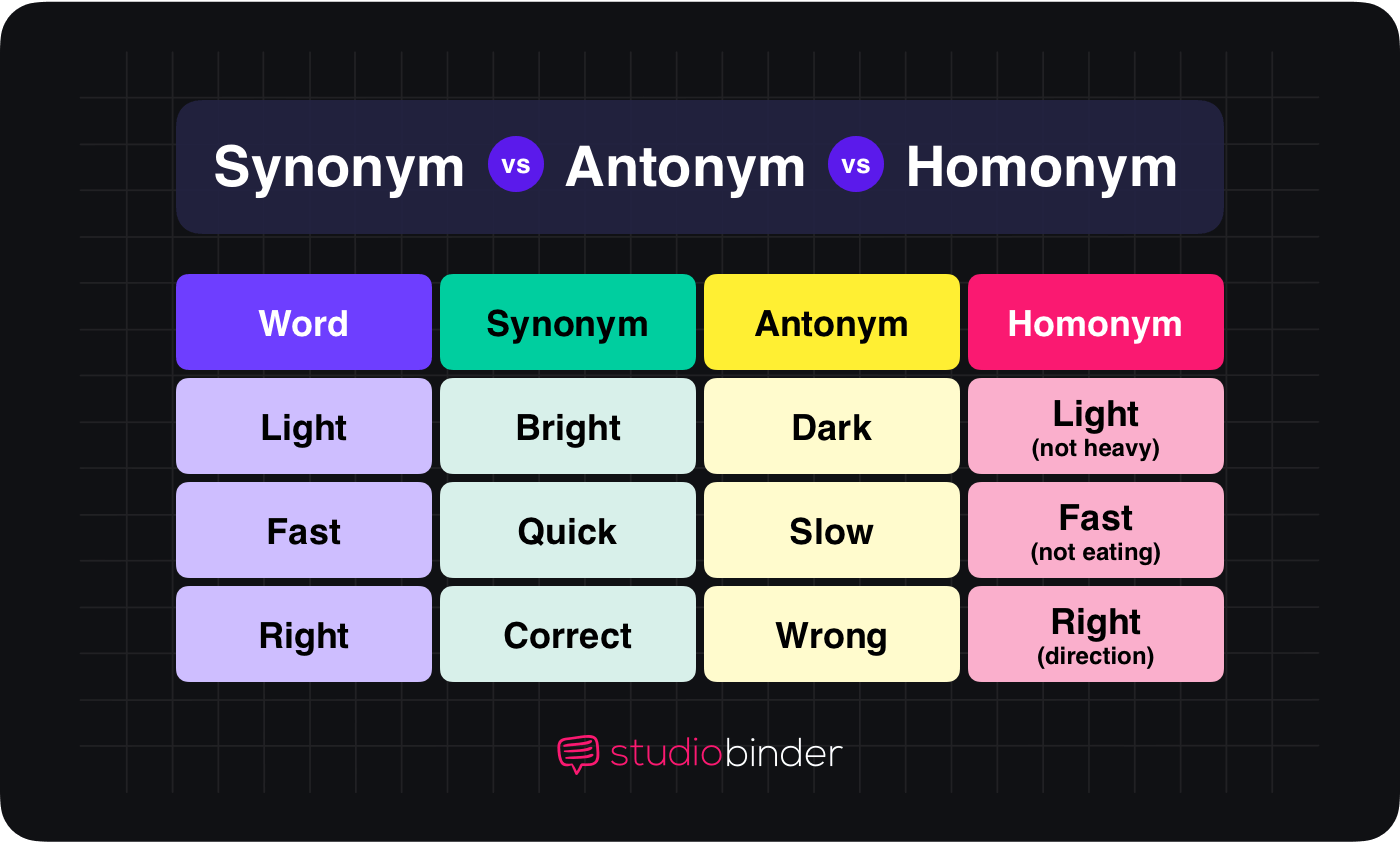

Words are the foundation of communication, and choosing the right vocabulary can significantly improve how clearly ideas are expressed. Many writers, students, bloggers, and professionals often search for a different synonym to avoid repetition and enhance the quality of their writing. The word “different” is commonly used in everyday language, but repeating it too often can make content sound repetitive or less engaging.
What Does “Different” Mean?
Before exploring a different synonym it is important to understand the meaning of the word itself. The word “different” refers to something that is not the same as another thing. It highlights contrast, distinction, or variation between two or more items.
In simple terms, “different” means:
- Not the same
- Unique or distinct
- Separate or unlike something else
For example:
- Every student has a different learning style.
- The two products look different from each other.
- People from different cultures have unique traditions.
Because the word is widely used, finding a suitable different synonym can improve writing variety and clarity.
Why Writers Use a Different Synonym
Using the same word repeatedly can weaken writing. That is why many writers look for a different synonym when creating articles, essays, or blog posts.
Here are some reasons why synonyms are helpful.
Avoid Repetition
Repeating “different” many times can make sentences sound repetitive. Replacing it with a different synonym keeps the text fresh.
Improve Readability
Varied vocabulary makes content easier and more enjoyable to read.
Enhance SEO Writing
Search engines prefer natural language. Using variations like a different synonym can help maintain proper keyword balance.
Improve Vocabulary Skills
Learning multiple synonyms expands vocabulary and improves communication.
Most Common Different Synonym Options
There are many alternatives that can function as a different synonym. Each word may have slightly different meanings depending on context.
Below are some of the most commonly used options.
1. Distinct
“Distinct” is a strong different synonym used to emphasize clear differences.

Examples:
- The two brands have distinct styles.
- Each culture has distinct traditions.
This synonym is often used in academic or professional writing.
2. Unique
“Unique” is another popular different synonym, meaning something that is one of a kind.
Examples:
- Her design ideas are truly unique.
- Every person has a unique personality.
This word highlights originality and individuality.
3. Diverse
“Diverse” is a different synonym that suggests variety or a mixture of elements.
Examples:
- The city has a diverse population.
- The company offers diverse services.
It is commonly used in discussions about culture, communities, and industries.
4. Separate
“Separate” can also function as a different synonym, particularly when referring to things that are divided or not combined.
Examples:
- The twins have separate interests.
- The company operates in separate departments.
5. Alternative
“Alternative” is a useful different synonym when referring to another option or choice.
Examples:
- We should consider an alternative solution.
- She suggested an alternative plan.
6. Varied
“Varied” is a different synonym used when talking about multiple types or variations.
Examples:
- The restaurant menu offers varied dishes.
- Students have varied opinions about the topic.
7. Unusual
“Unusual” works as a different synonym when something is not typical or expected.
Examples:
- That was an unusual approach to solving the problem.
- The artist uses unusual materials.
Different Synonym for Academic Writing
Academic writing requires precise language, so choosing the right different synonym is important.
Common academic alternatives include:
- Distinct
- Diverse
- Varied
- Alternative
- Separate
Example:
Instead of writing:
“Researchers studied different methods.”
You can write:
“Researchers studied varied methods.”
Using a refined different synonym improves clarity and professionalism.
Different Synonym for Everyday Communication
In everyday conversations, people often use simpler words as a different synonym.
Examples include:
- Unlike
- Another
- Separate
- New
Example sentences:
- This phone is different from the previous model.
- This phone is unlike the previous model.
These simpler alternatives help keep communication natural.
Examples of Different Synonym in Sentences
Understanding how to use a different synonym becomes easier through examples.
- Every country has different traditions.
- Every country has distinct traditions.
- She tried different methods to solve the problem.
- She tried varied methods to solve the problem.
- People have different opinions about the topic.
- People have diverse opinions about the topic.
- We need a different solution.
- We need an alternative solution.
- Each student has a different learning style.
- Each student has a unique learning style.
These examples demonstrate how a different synonym can improve sentence structure.
Different Synonym in Business and Marketing
Business writing often requires stronger vocabulary. Using the right different synonym can make marketing messages more persuasive.
Popular options include:
- Unique
- Innovative
- Distinct
- Alternative
- Exclusive
Example:
Instead of saying:
“Our product is different.”
A stronger sentence would be:
“Our product offers a unique experience.”
Choosing the right different synonym makes marketing content more powerful.
Different-Synonym in Creative Writing
Creative writers frequently use a different synonym to add depth and style to storytelling.
Examples include:
- Unusual
- Extraordinary
- Distinct
- Unique
- Uncommon
Example sentence:
“The village looked different from any place she had ever seen.”
Improved sentence:
“The village looked unlike any place she had ever seen.”
Using a varied different synonym improves narrative quality.
Mistakes to Avoid When Using a Different-Synony
Although synonyms are helpful, they must be used carefully.
Ignoring Context
Not every different-synonym fits every sentence.
Incorrect example:
“The cake tastes diverse.”
Correct example:
“The cake tastes unique.”
Using Overly Complex Words
Some synonyms may sound unnatural in simple writing.
Example:
Using “divergent” in casual conversation may feel too formal.
Choose a different-synonym that matches the tone of the content.
Replacing Words Without Understanding Meanin
Always check the meaning before replacing “different” with a different-synonym.
Some words have slightly different implications.
Tips for Choosing the Right Different-Synonym
Selecting the right different-synonym depends on the situation. Here are a few useful tips.
Consider the Context
Ask yourself whether you are describing contrast, uniqueness, or variety.
Match the Tone
Formal writing may require words like “distinct,” while casual writing may use “unlike.”
Keep Sentences Natural
Choose a different-synonym that sounds natural within the sentence.
Avoid Keyword Stuffing
For SEO writing, it is important to maintain a balanced keyword density.
How Learning Different-Synonym Improves Vocabulary
Learning a variety of different-synonym options can greatly improve language skills.
Benefits include:
- Better writing quality
- More engaging content
- Improved academic performance
- Stronger communication skills
Students, bloggers, marketers, and professionals can all benefit from expanding their vocabulary with useful synonyms.
Different-Synonym List (Quick Reference)
Here is a quick list of common alternatives:
- Distinct
- Unique
- Diverse
- Alternative
- Separate
- Varied
- Unusual
- Unlike
- Uncommon
- Individual
These words can often function as a different-synonym depending on the sentence.
When Not to Replace the Word “Different”
Sometimes the simplest word is the best choice. Even though many synonyms exist, replacing “different” is not always necessary.
For example:
“People from different countries attended the event.”
In this case, the original word works perfectly.
Using a different synonym should improve clarity, not complicate the sentence.
Final Thoughts
The word “different” is one of the most commonly used terms in the English language. However, using it repeatedly can make writing feel repetitive. Learning a suitable different-synonym allows writers to add variety, improve readability, and create more engaging content.
From words like distinct and unique to diverse and alternative, there are many effective options depending on the context. By understanding when and how to use each different-synonym, writers can strengthen their vocabulary and enhance the quality of their communication.
Whether you are writing blog posts, academic essays, business content, or everyday messages, choosing the right different synonym will help make your writing clearer, richer, and more professional.
